ApexSuite – Premium Next.js 14 Admin Dashboard Template

HTML5 CSS3 JavaScript
Need Help ?
ApexSuite – Premium Next.js 14 Admin Dashboard Template - Premium Template

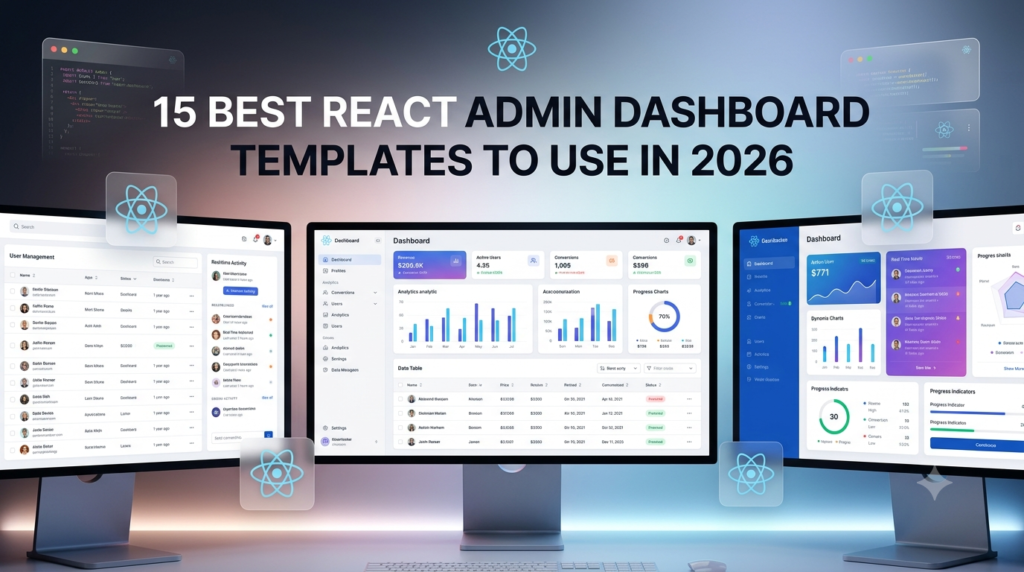
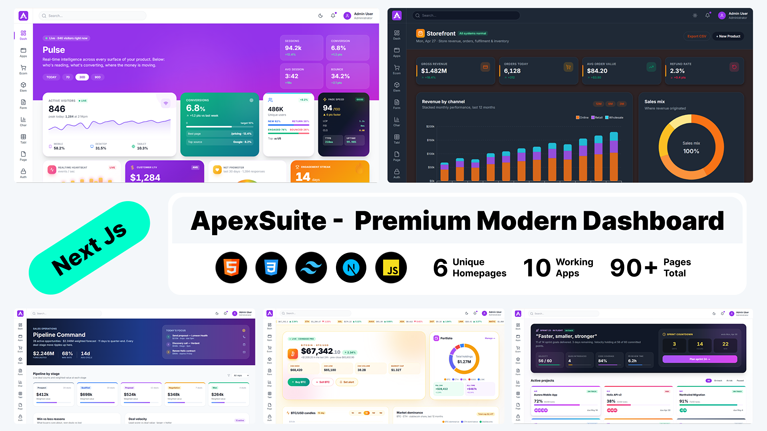
ApexSuite is a modern, production-ready admin dashboard template built on Next.js 14 App Router and React 18, designed for SaaS platforms, analytics products, internal tools, CRM systems, ecommerce back offices, and any data-rich web application that needs a polished, enterprise-grade interface out of the box. Every page in ApexSuite is a real, hand-crafted interface — not a placeholder — so developers can ship faster, designers get a head start, and product teams can prototype ideas in hours instead of weeks.

12+

Inner Pages

100%

Fully Responsive

Clear Documentation

Premium Support

Regular Updates

Need Help? We're Here For You

Our dedicated support team is available 24/7 to help you with any questions or issues. Get in touch with us anytime.

24/7

Availability

Fast Response

Time

Expert

Assistance

Versatile Dashboard Options

Discover our most popular modern, responsive, and developer-friendly admin dashboard templates.

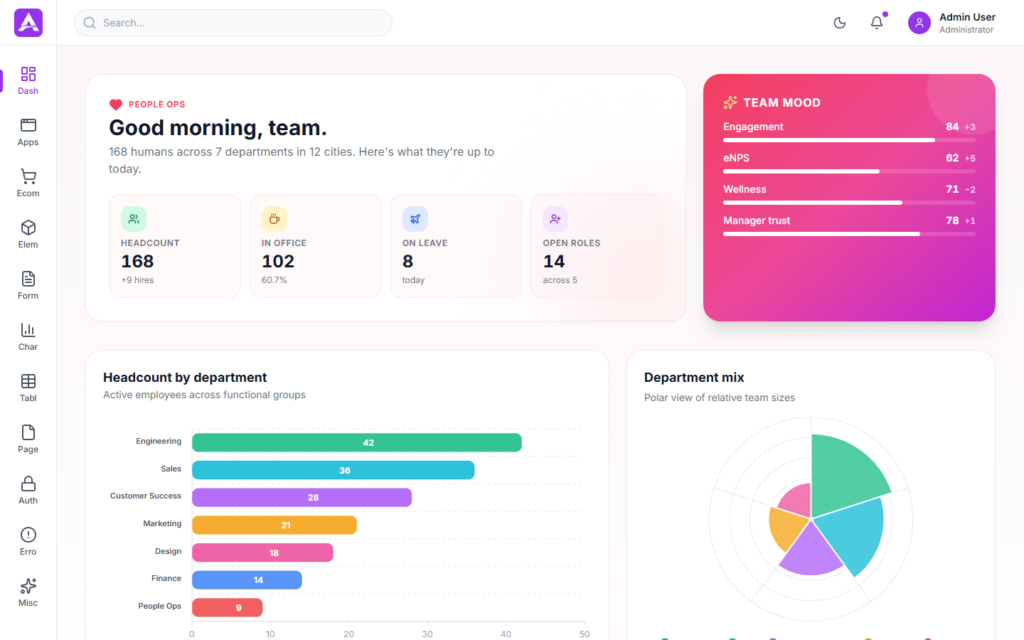
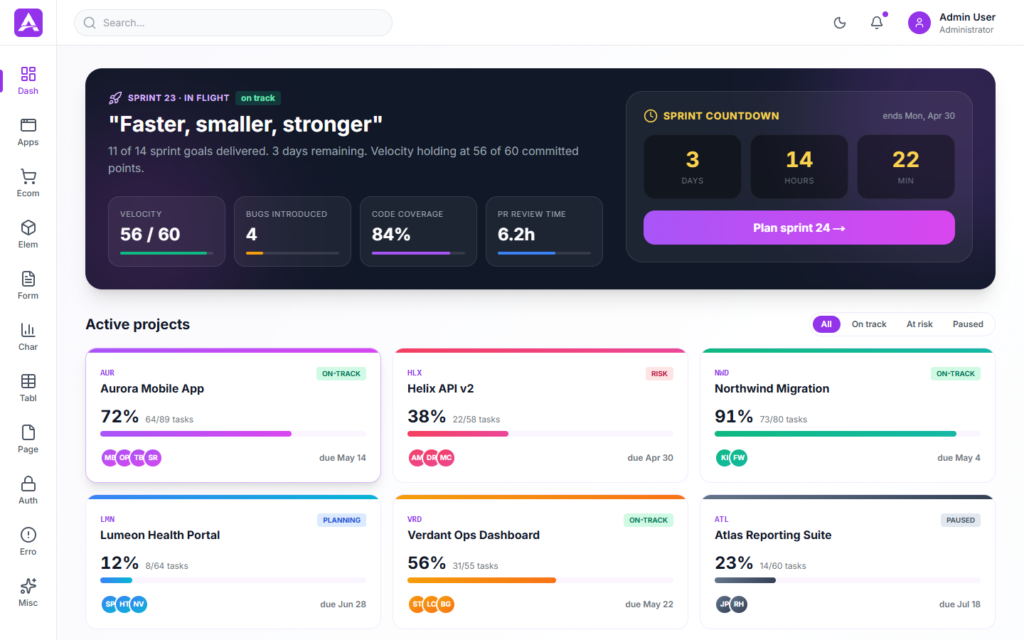
Six dashboards, six different stories.

Flexible pricing plans tailored for your business

Discover our range of professionally designed templates.

100% Moneyback Guarantee
Secure Checkout · Instant Download · Risk Free

Single Use

For a single end product, with no user fees.

$24
Purchase Now
  • Full source code
  • Documentation
  • Use in SaaS app
  • Projects 1

Multiple Use

For a single end product, with no user fees.

$49
Purchase Now
  • Full source code
  • Documentation
  • Use in SaaS app
  • Projects 3

Extended Use

For a single end product, with no user fees.

$199
Purchase Now
  • Full source code
  • Documentation
  • Use in SaaS app
  • Projects Unlimited

For Business

For multiple end products with user charges.

$299
Purchase Now
  • Full source code
  • Documentation
  • Use in SaaS app
  • Projects Unlimited

Description

ApexSuite is a modern, production-ready admin dashboard template built on Next.js 14 App Router and React 18, designed for SaaS platforms, analytics products, internal tools, CRM systems, ecommerce back offices, and any data-rich web application that needs a polished, enterprise-grade interface out of the box. Every page in ApexSuite is a real, hand-crafted interface — not a placeholder — so developers can ship faster, designers get a head start, and product teams can prototype ideas in hours instead of weeks.

Six unique, hand-designed dashboards

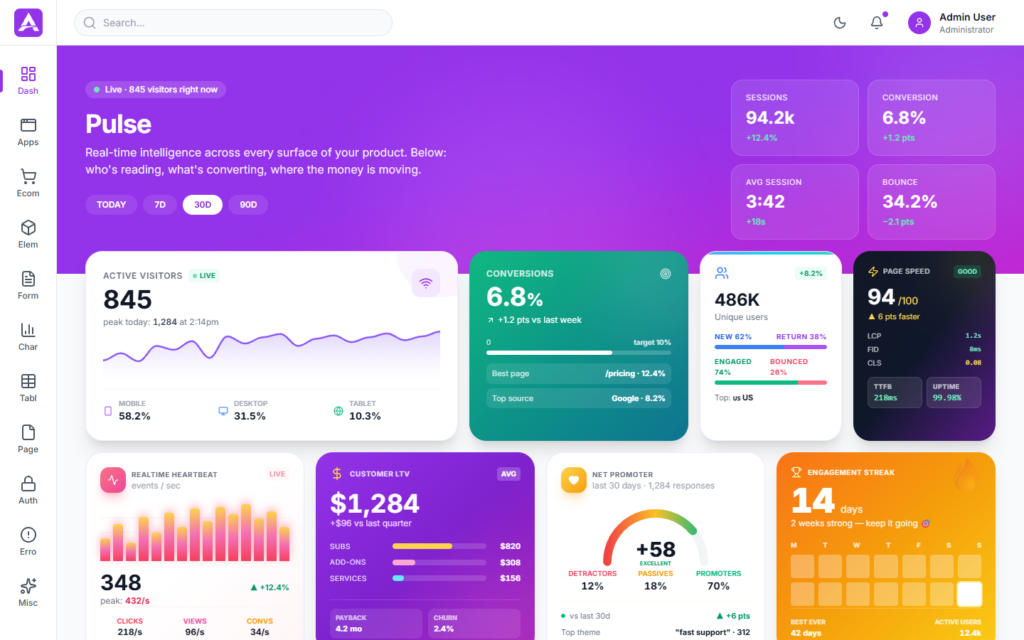
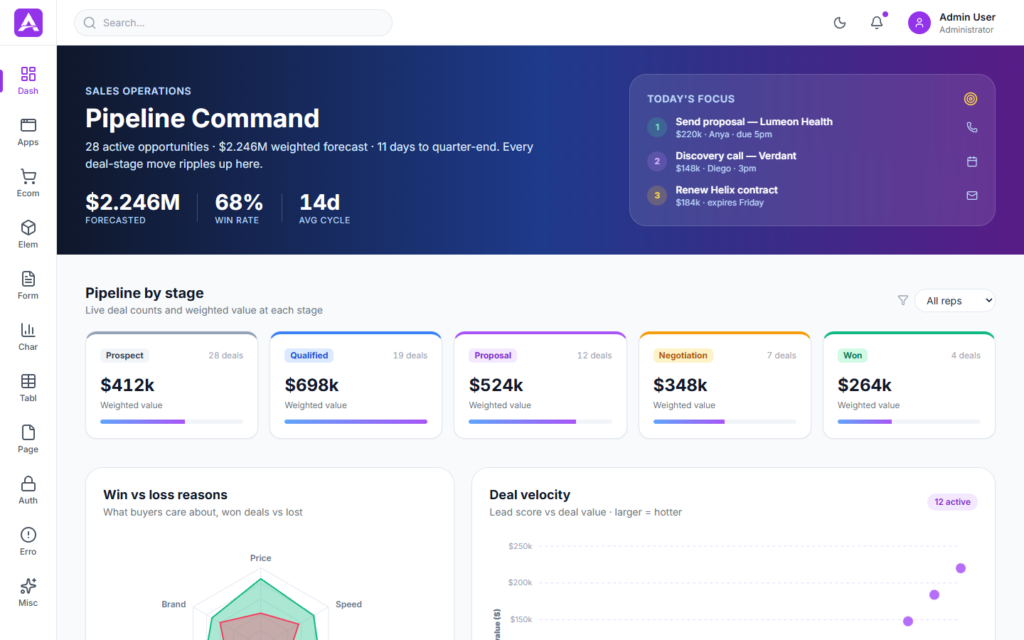
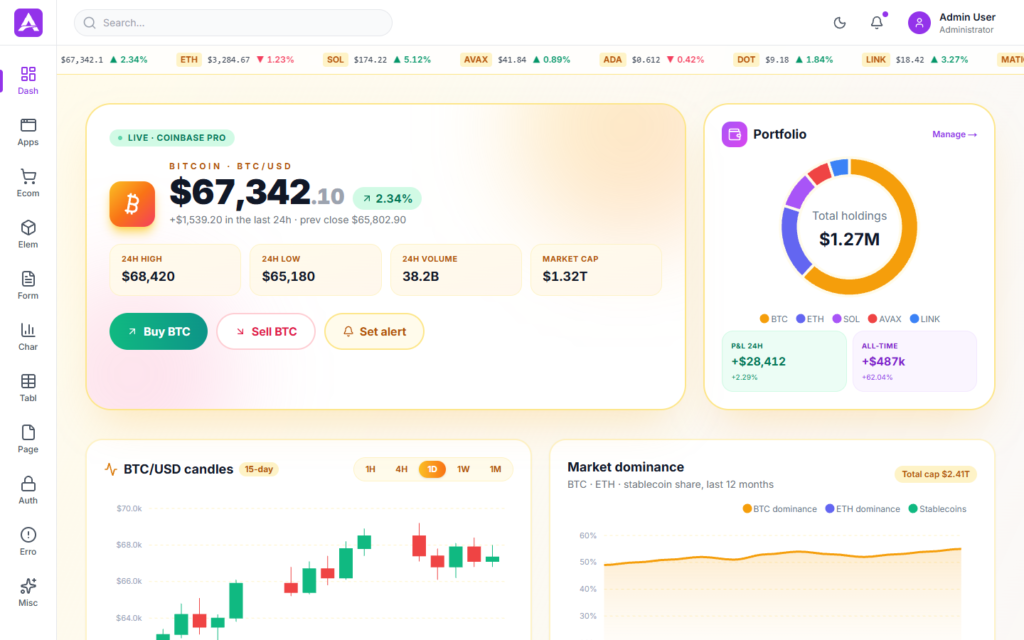
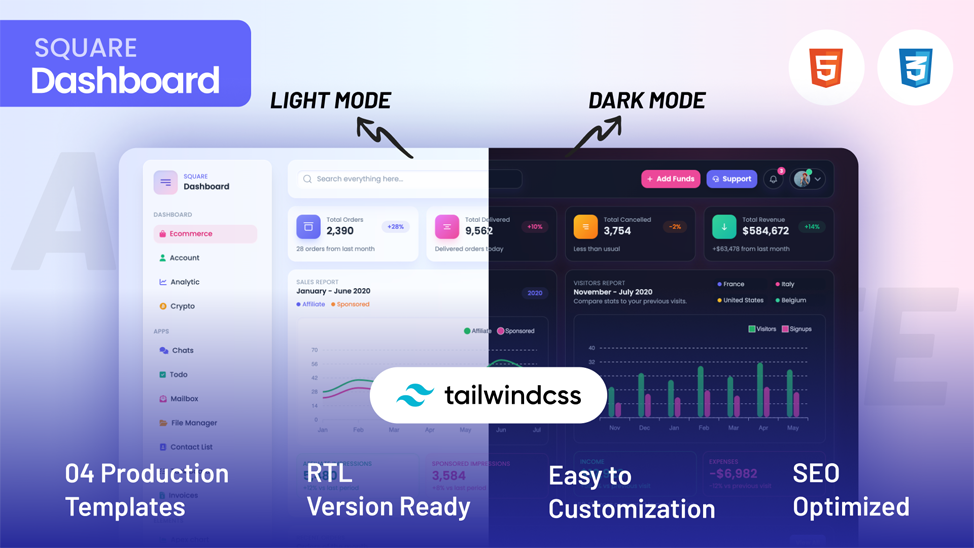
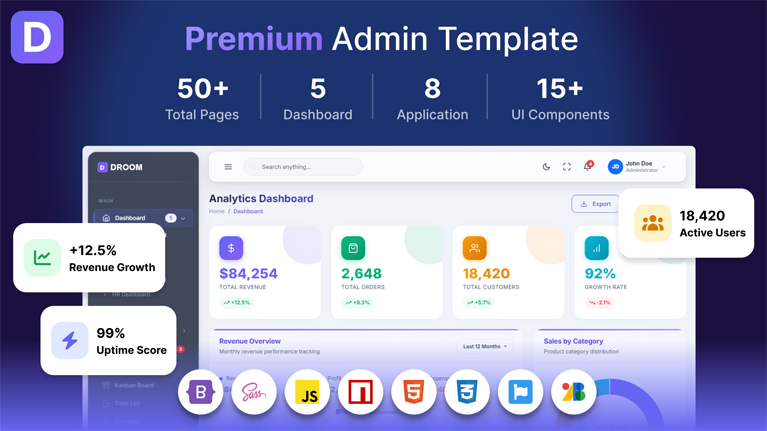
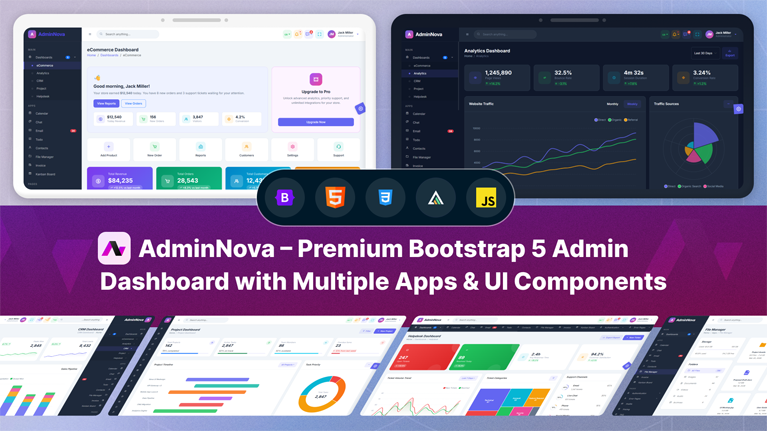
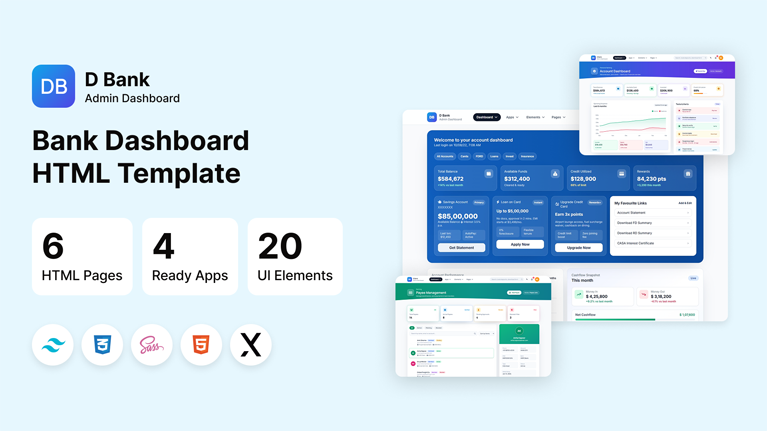
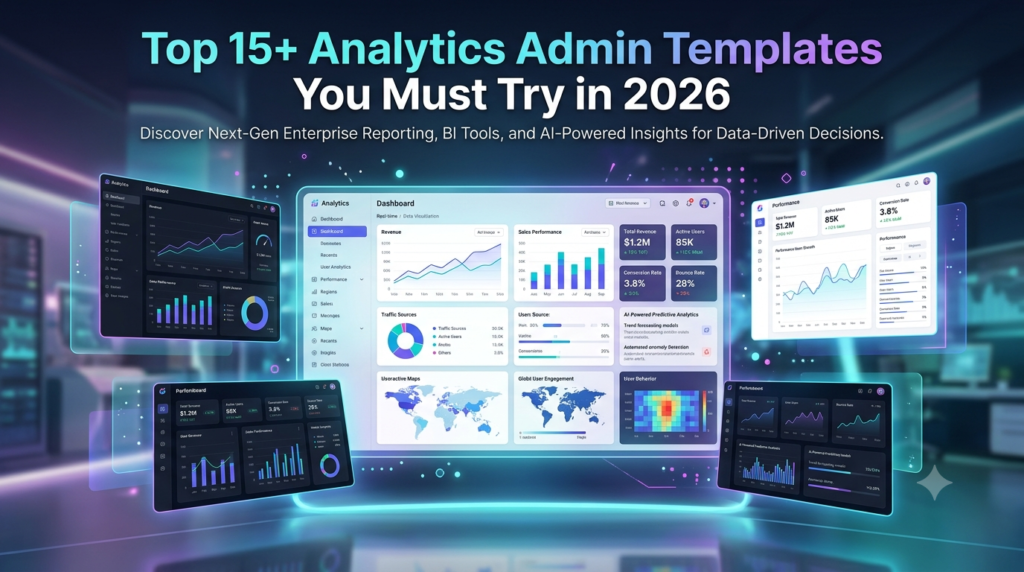
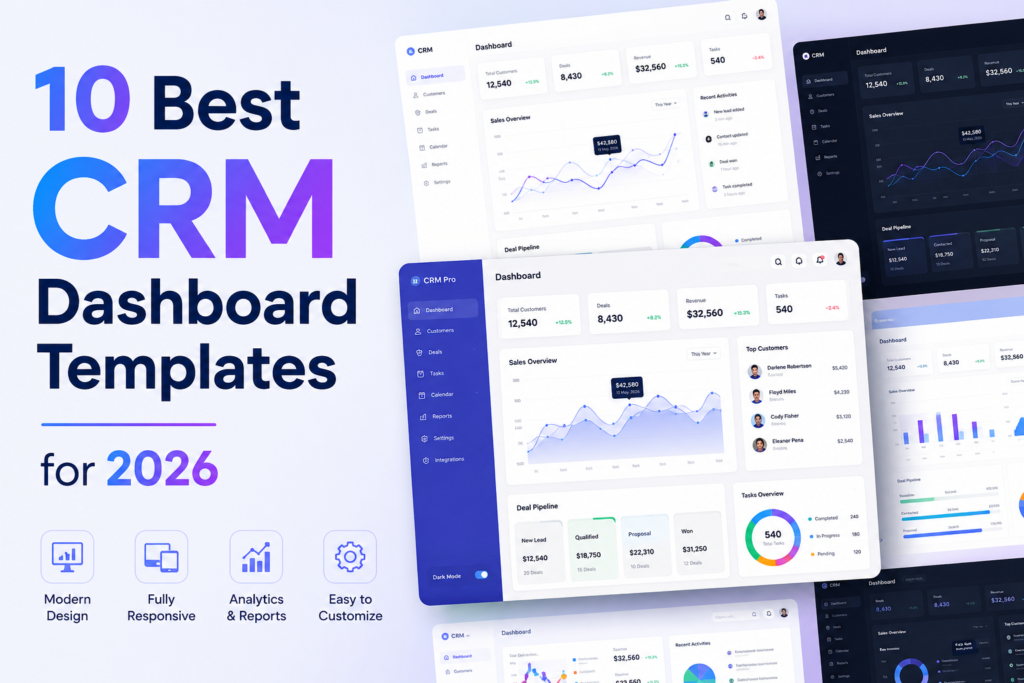
ApexSuite includes six fully unique dashboards, each with its own visual language, KPI system, and data widgets: an Analytics dashboard with realtime heartbeat charts and conversion funnels; an Ecommerce dashboard with revenue cohorts, order pipelines, and product performance tables; a CRM dashboard with deal pipeline visualization, activity feeds, and sales forecasts; a Crypto dashboard with marquee tickers, candlestick charts, watchlists, and a Fear & Greed gauge; a Projects dashboard with timeline views, sprint velocity, and burndown charts; and a HR dashboard covering attendance, OKRs, and people analytics.

Ten complete productivity apps

Beyond dashboards, ApexSuite ships ten fully functional productivity applications ready to drop into any product: an Email inbox with labels, filters, and reading pane; a Chat application with direct messages, group conversations, and online presence; a Calendar with month, week, and agenda views; a drag-and-drop Kanban board with WIP limits; a Tasks manager with priorities, subtasks, and due dates; a Contacts app with activity timelines; a File manager with folder navigation and storage quotas; a Notes app with color tags, pinning, and full-text search; a Todo list with smart filters; and a Scrum board with sprint planning, velocity tracking, and burndown charts.

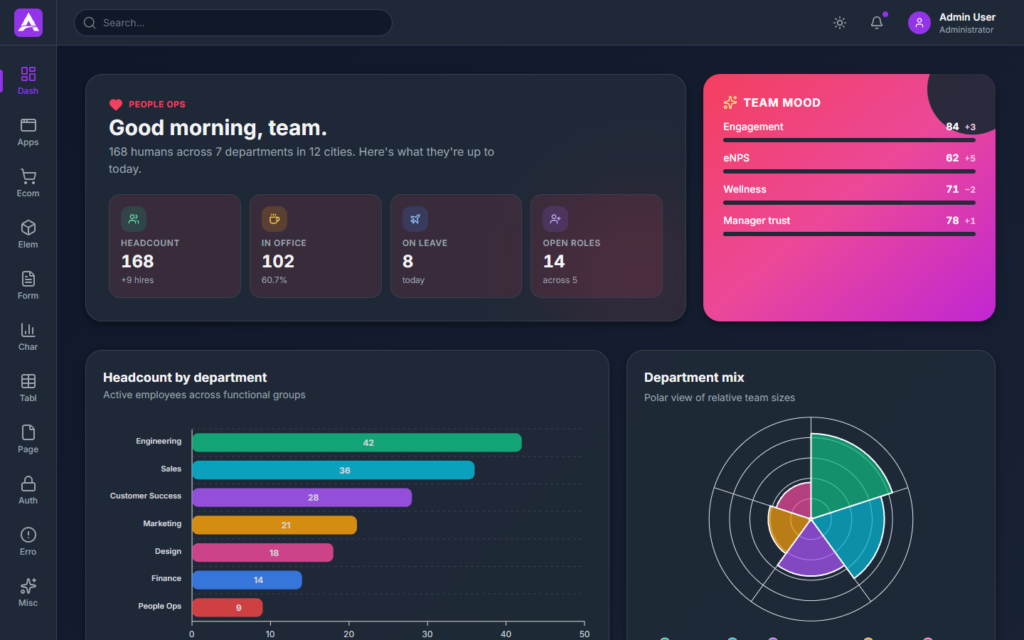
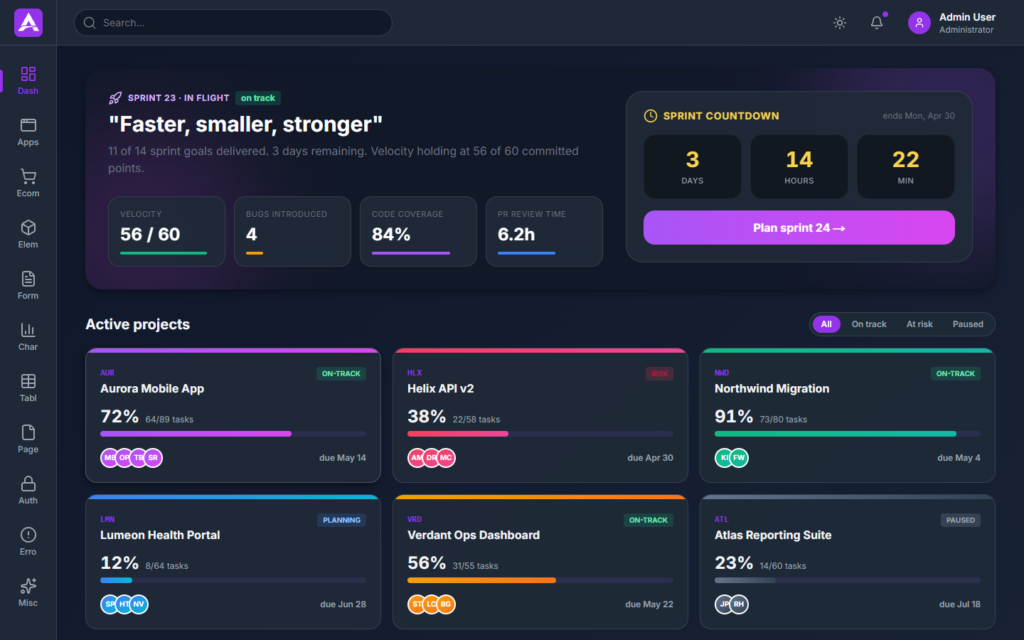
Comprehensive dark mode

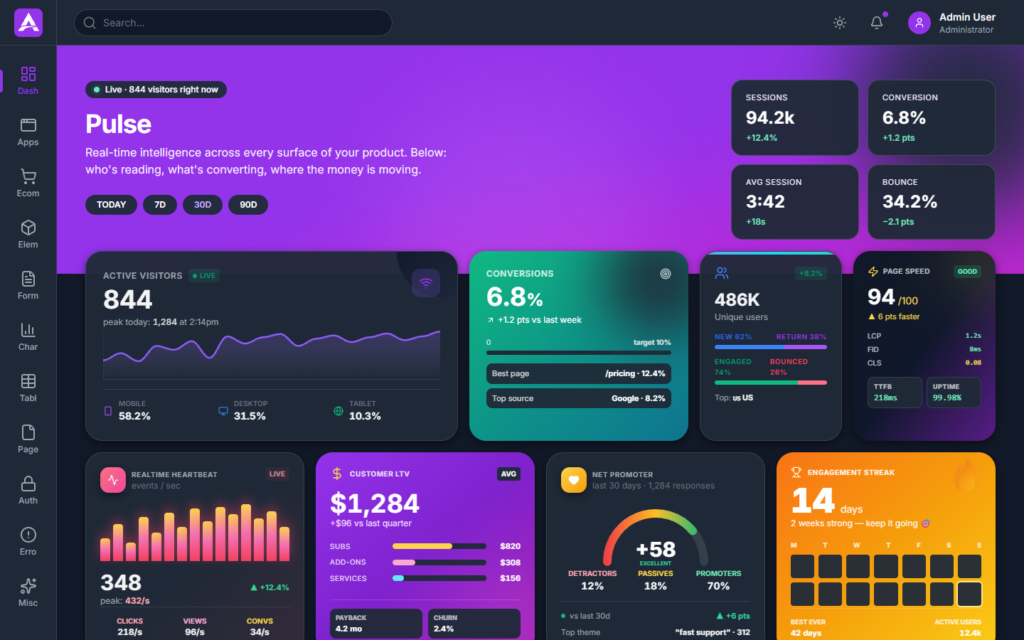
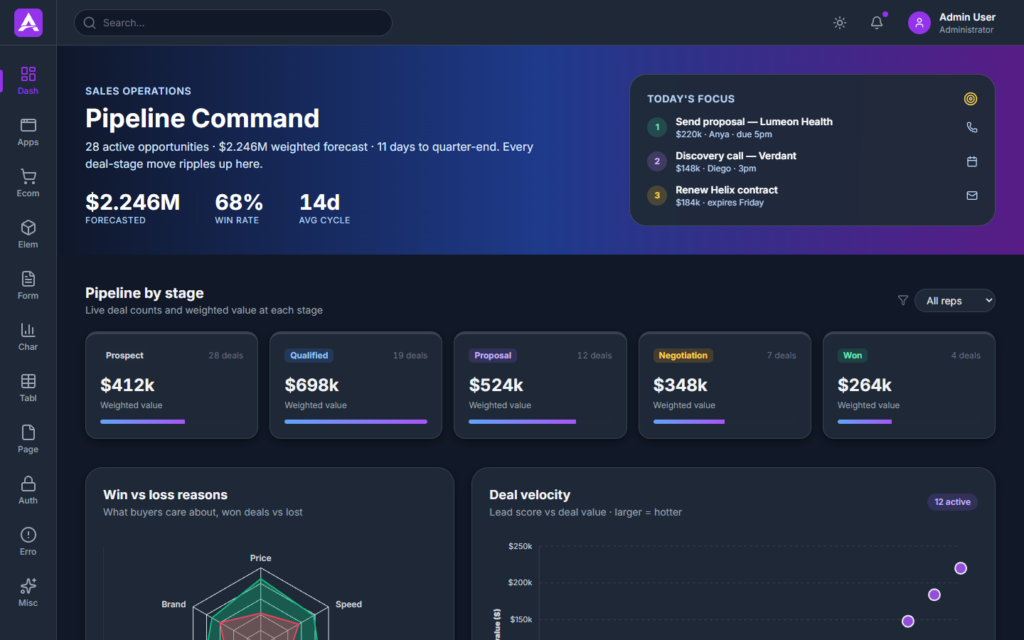
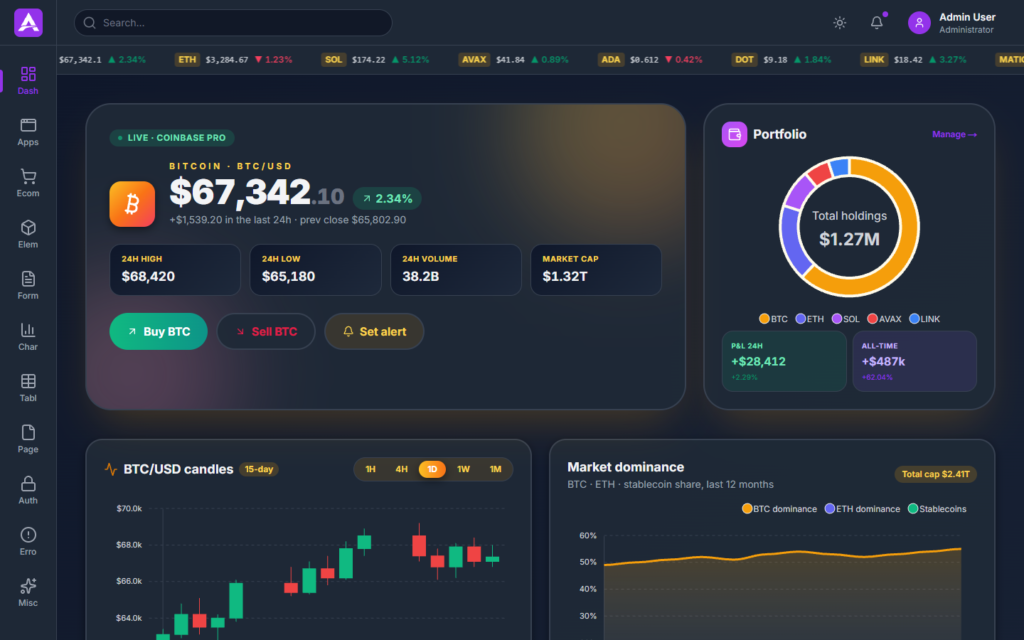
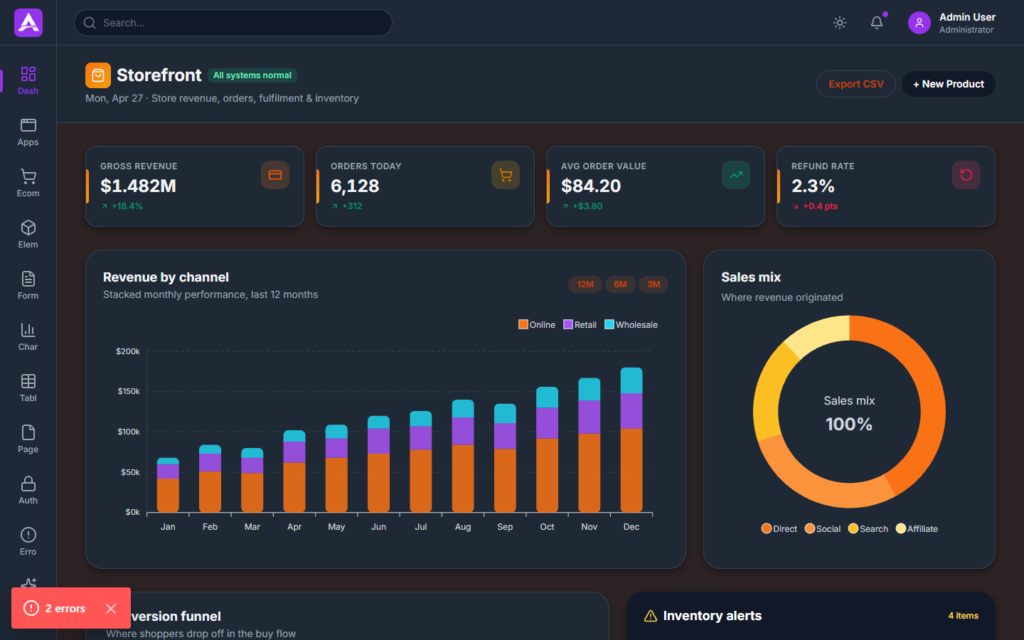
ApexSuite ships with a complete light and dark theme that flips the entire UI with one toggle. The dark mode is implemented as a class-based skin layer that automatically re-tints background gradients, chart colors, scrollbars, tooltips, form controls, and 90+ pages without per-page edits. Users can toggle the theme from the topbar, deep-link any page in light or dark via the ?theme=dark URL parameter, or fall back to the operating system’s preferred color scheme. The theme is applied before paint via an inline init script, eliminating the flash-of-wrong-theme problem common to other admin templates.

200+ UI elements and components

The component library covers everything a real product needs: alerts, badges, buttons, cards, carousels, modals, tabs, tooltips, accordions, progress bars, breadcrumbs, pagination, spinners, toast notifications, avatars, dropdowns, list groups, media objects, popovers, and a complete typography system. Every element is themed for both light and dark mode, fully responsive, and built with accessibility in mind. Forms include basic patterns, advanced controls, multi-step wizards (horizontal, vertical sticky-nav, branching, and compact), validation, file uploads with drag-and-drop, dynamic repeaters, searchable selects, and a contentEditable rich text editor.

Real charts, not images

ApexSuite integrates four production-ready chart libraries — ApexCharts, Chart.js v4, ECharts, and custom SVG sparklines & knob charts — all themed for both light and dark mode out of the box. Every chart on every page is a live, data-driven component with proper tooltips, axis labels, grid lines, and animations. The dark mode skin automatically re-tints SVG-based charts via CSS, while canvas-based Chart.js tooltips use a dark popover style that works on both themes.

Authentication and state pages

A complete authentication flow is included: login, register, forgot password, reset password, two-factor authentication, and lock screen — all with polished gradient hero panels, social login buttons, password strength meters, and validation. Error pages cover 400, 401, 403, 404, 500, and 503 with unique illustrations and helpful CTAs. Bonus pages include maintenance mode, coming-soon countdowns, and a marketing landing page.

Ecommerce-ready

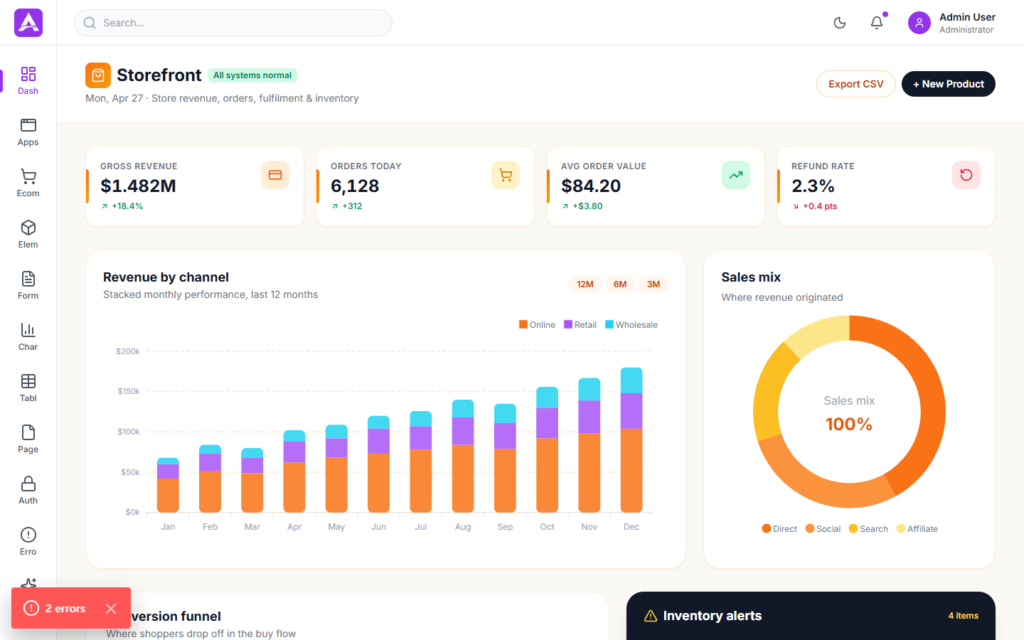
For ecommerce admin panels and storefronts, ApexSuite ships a complete suite: products listproduct detailshopping cartcheckout floworders management, and customers — each with realistic sample data, filters, sorting, and bulk actions. Tables include sticky action columns, horizontal scroll for wide datasets, expandable rows for nested details, sortable inventory views, and card-based layouts that adapt automatically on smaller screens.

Pixel-perfect responsive design

Every page in ApexSuite is mobile-first responsive down to 360-pixel screens. The sidebar collapses into a swipeable drawer on mobile with a backdrop, hover flyouts on desktop, and tap-to-open / tap-to-close interactions on touch devices. Grids reflow at every breakpoint, headers wrap to multi-row layouts on narrow viewports, tables scroll horizontally inside their containers, and chart canvases never overflow.

Built on modern technology

The technology stack is intentionally mainstream and easy to extend: Next.js 14 (App Router), React 18Tailwind CSS 3 (with class-based dark mode), Headless UIlucide-react and Heroicons v2ApexChartsChart.jsEChartsreact-beautiful-dnd for drag and drop, and the Inter typeface. The project is configured for full static export — running npm run build produces a plain HTML, CSS, and JS bundle that can be hosted on any shared host (Apache, Nginx, S3, Netlify, Vercel, GitHub Pages) without a Node runtime. A pre-configured .htaccess handles trailing-slash redirects, gzip and brotli compression, long-term caching for hashed assets, and security headers including X-Frame-Options, X-Content-Type-Options, Referrer-Policy, and Permissions-Policy.

Tables, forms, and data layouts

Data presentation is a strength: basic tablesdata tables with search and pagination, responsive tables that morph into card layouts on mobile, and editable tables with inline cell editing. Form patterns include simple inputs, advanced controls (date pickers, color pickers, range sliders, toggles), client-side validation with field-level error states, multi-step wizards with sticky step navigation, drag-and-drop file uploaders with previews, dynamic repeater fields, and a full-featured rich text editor.

Page library

Beyond dashboards and apps, ApexSuite includes a comprehensive set of marketing and utility pages commonly required in real products: a profile page, account settings, pricing page, FAQ, terms of service, timeline page, image gallery, blog listing and detail pages, contact form, about page, and search results. All are themed for both light and dark mode, mobile-responsive, and ready to integrate with any backend.

Why ApexSuite

ApexSuite is engineered for teams that want premium quality without premium build time. Every interface follows production patterns — sticky page headers, responsive sidebars, accessible modals, consistent spacing, smooth animations, and predictable interaction states. The codebase uses simple JSX (no obscure abstractions), readable Tailwind utility classes, plain JavaScript state with React hooks, and conventional file-based routing — making it easy for developers of any skill level to read, customize, and extend. Whether you’re building a SaaS analytics platform, a CRM, a crypto dashboard, an internal admin tool, an HR portal, an ecommerce back office, a project management app, or any other data-driven web product, ApexSuite gives you a head start with a professionally designed, performance-tuned, dark-mode-ready foundation.


Why Developers Choose Us

Our templates include everything you need to create modern, scalable websites with ease.

Responsive Design

Every template is fully responsive and looks stunning on all devices - from mobile to desktop.

Lightning Fast

Optimized for performance with minimal CSS and no dependencies. Your site will load in milliseconds.

Easy Customization

Easily customize layouts, colors, typography, and components to match your brand identity.

Clean Code

Well-organized, commented code that's easy to understand and modify for your needs.

Regular Updates

Get free lifetime updates with new features, improvements, and security patches.

Premium Support

Get help when you need it with our dedicated support team available 24/7.

Frequently Asked Questions

Find answers to the most common questions about orders, shipping, returns, and more.

Still have a question?

We're here to help! Reach out to our support team and we'll get back to you as soon as possible.

What is an admin dashboard template and how is it used in web applications?
An admin dashboard template is the control room of a web application. Every serious product has one. It is where administrators manage users, teams monitor activity, and product managers watch performance numbers move in real time. Instead of designing and building this interface from scratch, developers start with a template that already contains the structural UI layer required for operations. Inside it live dashboards, reporting panels, tables that hold thousands of records, configuration pages, and system controls. Engineers connect their backend services to this interface and immediately gain a working operational console. That shortcut removes a large portion of repetitive interface development that most web applications eventually require.
Which frameworks do modern admin dashboard templates usually support?
Admin dashboards rarely exist in isolation. They must fit directly into the development stack already running the product. For that reason most modern dashboard templates support several popular front-end frameworks. React appears most often because its component system fits data-heavy interfaces extremely well. Next.js commonly follows when teams want server rendering and efficient routing. Angular remains common inside enterprise environments where applications grow large and structured. Vue attracts teams who prefer lightweight reactive frameworks. Bootstrap dashboards remain useful for rapid interface deployment, while Tailwind dashboards provide extremely flexible styling systems. Supporting these frameworks allows teams to integrate dashboards into existing projects without reworking their entire codebase.
What features should a high-quality admin dashboard template include?
A capable admin dashboard template operates like the operating system of the application’s internal environment. It brings together multiple UI elements that administrators rely on constantly. Analytics dashboards visualize performance data through charts and graphs. Large data tables allow teams to browse and manage records such as users, transactions, or inventory items. Forms enable structured workflows like product creation or account management. Authentication pages handle system access. Notification panels show system events. Reporting modules summarize trends. Navigation systems tie everything together so users can move quickly between operational areas. When those components already exist, development teams skip weeks of repetitive interface work.
How much development time can an admin dashboard template save?
Admin dashboard templates compress the entire development phase dramatically. The UI infrastructure already exists. Developers move straight into connecting APIs, integrating databases, and wiring business logic into the interface. A dashboard template removes weeks of front-end engineering work and allows product features to reach production much faster.
Are admin dashboard templates suitable for large SaaS platforms?
Yes, and many SaaS products actually begin that way. The administrative needs of SaaS platforms tend to follow familiar patterns. Teams need user management panels, analytics views, subscription data, reporting tools, configuration pages, and system monitoring dashboards. A strong dashboard template already contains the UI structure required for these operations. Developers then extend it by adding application-specific data layers and new modules as the product evolves. Startups benefit because they launch quickly with a polished operational interface. In short, admin dashboard templates are very well suited for large SaaS platforms.
Can developers customize admin dashboard templates easily?
Yes of course! In fact, customization is a major reason teams choose dashboard templates in the first place. No two applications display identical data or follow identical workflows. Therefore, developers usually use dashboards extensively once the template enters a project. This makes sure that entire modules such as billing systems, order management panels, or customer support tools often get introduced. Templates are useful because they can change the branding easily. Because dashboard templates rely on reusable UI components, developers extend the interface gradually without rewriting the foundation.
Which types of applications commonly use admin dashboard templates?
Admin dashboards appear almost everywhere modern software operates. SaaS platforms depend on them to manage users and monitor product performance. Ecommerce companies operate inventory systems, orders, and sales metrics through dashboards. CRM tools use dashboard panels to organize the customer records and communication history. Even analytics platforms use them to visulaize reporting data.  Some enterprise tools depend on dashboards to track operations and system activity. Some marketplaces and fintech applications also depend heavily on administrative interfaces.

Explore Top Selling Admin Templates

Discover our most popular modern, responsive, and developer-friendly admin dashboard templates.

News & Articles

Discover our most popular modern, responsive, and developer-friendly admin dashboard templates.

Subscribe to our newsletter

From strategy to execution, we help you create powerful digital experiences that drive real results.

Stay Updated No spam, unsubscribe anytime.