


Building an ecommerce admin panel from scratch takes weeks. You wire up order tables, build product forms, scaffold inventory views, and set up analytics before writing a single line of business logic.
A purpose-built ecommerce admin dashboard template cuts that to days. But the wrong template creates another problem: a generic dashboard with one chart and a product table, leaving your team building every operational screen anyway.
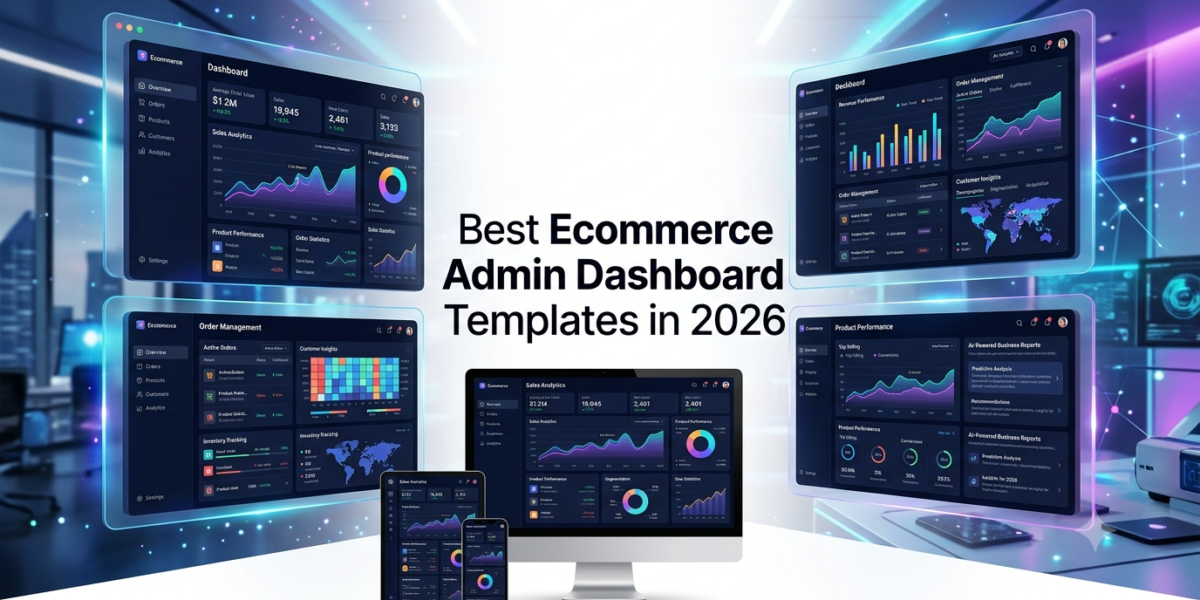
This guide covers the best ecommerce admin dashboard templates in 2026, selected for real ecommerce depth: order management, product catalog pages, inventory tracking, customer records, and revenue analytics.
What Makes an Ecommerce Admin Dashboard Different from a Generic One
Most admin templates include a revenue chart and call it ecommerce-ready. A real ecommerce admin dashboard is built around the workflows a store operations team runs every day.
Before downloading any template, check that it covers all five of these functional areas:
- Order management: order list with status filters, individual order detail pages, and return or refund workflows
- Product catalog: product list with search and filtering, product creation and edit forms, category management, and variant support
- Inventory: stock-level views, low-stock indicators, and reorder threshold controls
- Customer records: customer list with purchase history, lifetime value, and account status
- Analytics: revenue totals, average order value, top-product performance, and conversion trends over time
A template missing two or three of these areas means your team builds those screens from scratch anyway. At that point, the template only gave you a sidebar and a color palette.
Best Ecommerce Admin Dashboard Templates in 2026
1. Larkon: Most Complete Ecommerce Admin Panel Template
Framework: Bootstrap 5.3.3 + HTML5, React, Next.js 16, Laravel, Django, PHP, CodeIgniter | License: Premium | Best For: Full ecommerce lifecycle management
Larkon is purpose-built for ecommerce operations rather than adapted from a general-purpose dashboard. The ecommerce page set covers the full store lifecycle: product lists, category and attribute management, inventory tracking, supplier purchase orders, customer records, seller management for marketplaces, coupon creation, invoice generation, review management, and return processing.
Seven framework variants ship from a single design system. Teams moving between Next.js 16, React, Laravel, Django, PHP, or CodeIgniter do not need to redesign their admin panel. The interface stays consistent regardless of the backend.
The depth of ecommerce-specific pages is what sets Larkon apart. Most admin dashboards provide a product list and an order table. Larkon provides an operational system covering workflows that most stores build themselves over months.
2. Metronic: Best Enterprise Ecommerce Admin Dashboard
Framework: Bootstrap 5 + Tailwind CSS, React, Angular, Vue, Laravel, Django, ASP.NET, Rails, Spring | License: Premium | Best For: Enterprise-scale ecommerce admin panels
Metronic is the best-selling admin template globally with a dedicated ecommerce dashboard variant. The ecommerce section includes product management with categories and attributes, order tracking with status workflows, customer management with purchase history, and analytics covering revenue, conversion rates, and product performance.
Forty prebuilt layouts address specific ecommerce niches: fashion, electronics, grocery, and marketplace configurations. Support for eight framework versions makes Metronic practical for large engineering teams working across different stacks. Responsive support and enterprise-grade documentation reduce maintenance risk for production ecommerce panels.
3. Fastkart: Best Ecommerce Admin Template with Shopify Support
Framework: HTML, Angular 21, React/Next.js, Nuxt.js, Shopify | License: Premium | Best For: Shopify stores and multi-framework ecommerce builds
Fastkart is one of the few premium ecommerce admin templates to include a Shopify-compatible variant. For stores on Shopify, that removes the need for significant custom development. For teams building on Angular, React, Nuxt, or plain HTML, each variant ships from the same design system.
The package includes five product layouts, seven shop layout options, a full admin panel, email templates for order confirmation and shipping notifications, and invoice templates. Email templates are a practical inclusion most competitors skip. The multi-vendor support makes Fastkart a strong option for marketplace platforms where multiple sellers operate under one storefront.
4. Vuexy: Best Multi-Framework Ecommerce Admin Dashboard
Framework: Vue.js, Nuxt, Next.js, HTML, Laravel, ASP.NET, Django | License: Premium | Best For: Multi-framework ecommerce dashboards
Vuexy covers the widest range of frameworks from a single design system. Vue.js, Nuxt, Next.js, HTML, Laravel, ASP.NET, and Django variants all ship with consistent ecommerce-ready components: 60-plus advanced analytics cards covering revenue, orders, conversion rates, and product performance.
The built-in fuzzy search, floating navigation bar, dark and semi-dark layouts, and unlimited color options make it adaptable for stores with specific brand requirements. Ten pre-built application modules covering email, chat, calendar, and to-do lists ship alongside the dashboard pages. Vuexy is updated regularly against framework releases, which matters for ecommerce teams maintaining dashboards over the years.
5. Sneat: Best Ecommerce Admin Template for Laravel and Bootstrap Backends
Framework: Bootstrap 5, Vue, Laravel, Nuxt, Django, ASP.NET | License: Free / Premium | Best For: Laravel and Bootstrap ecommerce builds
Sneat ships one design system across six backend frameworks. For agencies building ecommerce admin panels for different clients on different stacks, design consistency without rebuilding layouts per project is a practical advantage.
The ecommerce module includes 75 plus components covering product cards, order tables, revenue widgets, and customer views. The free version provides enough to start a prototype. The premium version adds dedicated support and a broader page set for production use.
6. Zenith: A Strong Bootstrap Option for Ecommerce Back-Ends
Framework: Bootstrap 5.3.3 | License: Premium | Available at: MyCreativeTemplates | Best For: Bootstrap ecommerce backends needing clean, maintainable code
Zenith is a multipurpose Bootstrap 5 admin dashboard from MyCreativeTemplates built for ecommerce back-ends, among other use cases. It covers the components an ecommerce team needs: product management pages, order tracking layouts, revenue analytics, customer records, and inventory displays, all ready to connect to your backend.
The code is hand-crafted with semantic HTML5, modern CSS3, and vanilla JavaScript. No jQuery dependency, no bloat. Every component follows a consistent design language across product pages, order views, and analytics panels. Backend integration cleanly covers PHP, Laravel, Node.js, Django, Ruby on Rails, and ASP.NET.
Modular CSS variables and a zero inline-script structure make brand customization fast. For teams building on Bootstrap 5 who want well-structured, maintainable code without the overhead of a large enterprise template, Zenith is the practical pick.
7. Adminator: Best Free Lightweight Starting Point
Framework: Vanilla JS / SCSS / Webpack 5 | License: MIT (Free) | Best For: Lightweight free base for custom ecommerce admin builds
Adminator is not an e-commerce-specific template, but its 2026 v4 release makes it a solid free foundation for teams building a custom ecommerce admin from scratch. No React, no Vue, no Bootstrap dependency. Total bundle size sits under 700 KB.
The data table component supports sorting, filtering, and pagination, which handles product and order listing pages without extra libraries. KPI grid widgets and Chart.js integration cover revenue, orders, and customer-count dashboards. A token-driven SCSS design system means re-skinning to match a brand requires updating one file.
Use Adminator when you need a free, zero-framework-lock-in foundation to build on. For out-of-the-box ecommerce pages, the premium picks above deliver significantly more.
Essential Features of Ecommerce Admin Dashboards
These are the features that directly affect daily store operations, not just what looks good in a screenshot:
Order status pipeline: Visual tracking from placed to shipped to delivered, filterable by status, date range, and fulfilment location. Teams processing 50 plus orders a day cannot work from a flat, unsorted list.
Product management: Create, edit, and delete products with variant support for size, color, and weight, plus media upload, category assignment, and SEO field controls in one form.
Inventory alerts: Low-stock notifications and reorder thresholds prevent stockouts without manual monitoring across spreadsheets.
Customer data: Full customer records with order history, lifetime value, contact details, and account status. Mature ecommerce operations separate customer management from order processing.
Analytics: Revenue by period, average order value, conversion trends, return rates, and top-selling products. These metrics drive restocking and promotional decisions.
Multi-currency and localization support: Stores serving international customers need currency conversion and localized display without custom engineering on every release.
Best Ecommerce Admin Templates Compared by Framework
Bootstrap Ecommerce Admin Templates
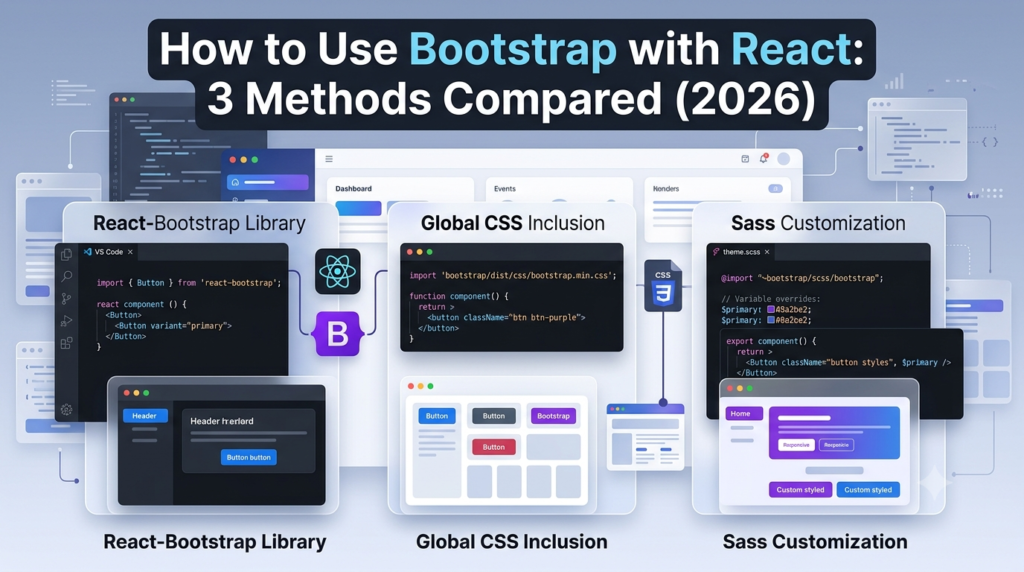
Bootstrap remains the practical choice for server-rendered ecommerce backends built on Laravel, Django, or PHP. Larkon and Zenith are the strongest Bootstrap picks. Larkon delivers the most ecommerce-specific pages. Zenith delivers a cleaner design and simpler backend integration for teams that do not need the full Larkon page set.
Browse the Bootstrap admin template
React and Next.js Ecommerce Admin Templates
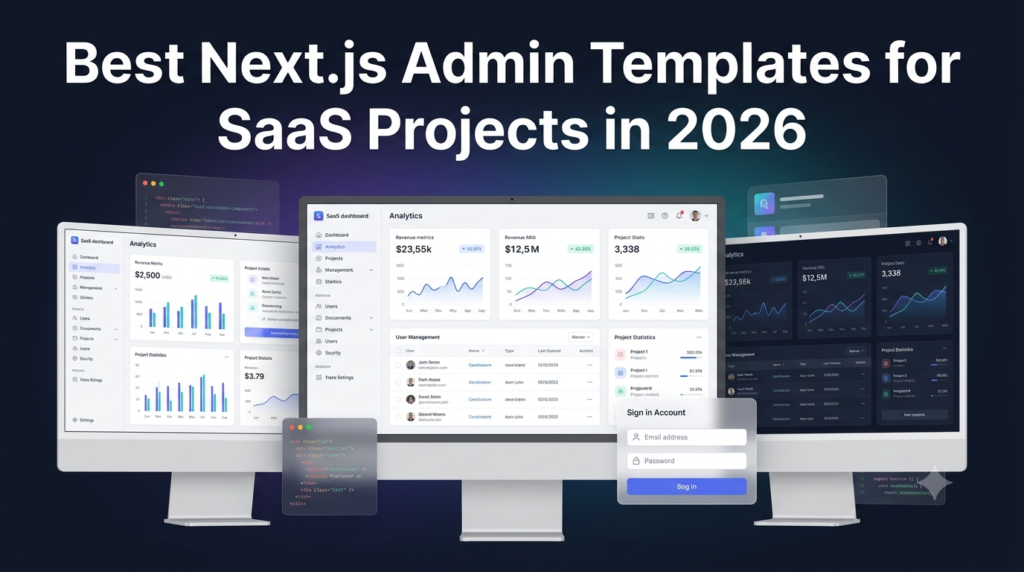
React and Next.js are the dominant stack for modern SaaS ecommerce admin panels. Vuexy and Larkon both ship Next.js variants with full ecommerce page sets. Metronic’s React version adds dedicated ecommerce dashboard variants with TanStack Table for large product catalogs.
Explore React admin templates and Next.js admin templates.
Tailwind CSS Ecommerce Admin Templates
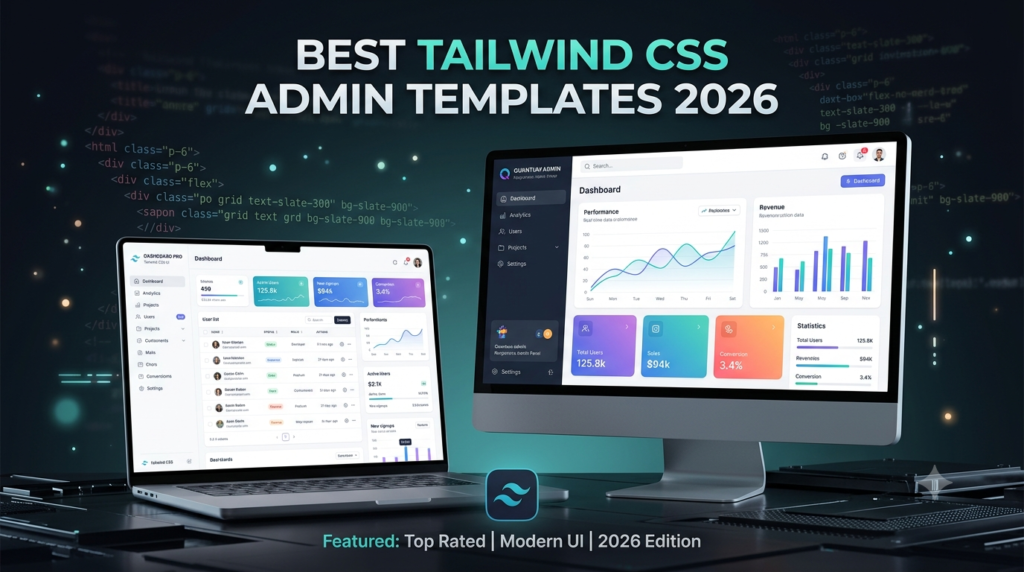
Tailwind CSS is increasingly the styling layer for new ecommerce admin builds. Metronic supports Tailwind CSS v4 alongside Bootstrap. For teams going utility-first from the start, the MyCreativeTemplates Tailwind collection offers dashboard-ready options with dark mode and responsive utilities.
Browse the Tailwind admin template
Vue Ecommerce Admin Templates
Vuexy is the strongest Vue ecommerce pick. For teams building on Vue 3 with Pinia and Vite, the MyCreativeTemplates Vue collection covers options built on current Vue 3 conventions with reactive data handling and pre-built dashboard layouts.
Browse the Vue admin template
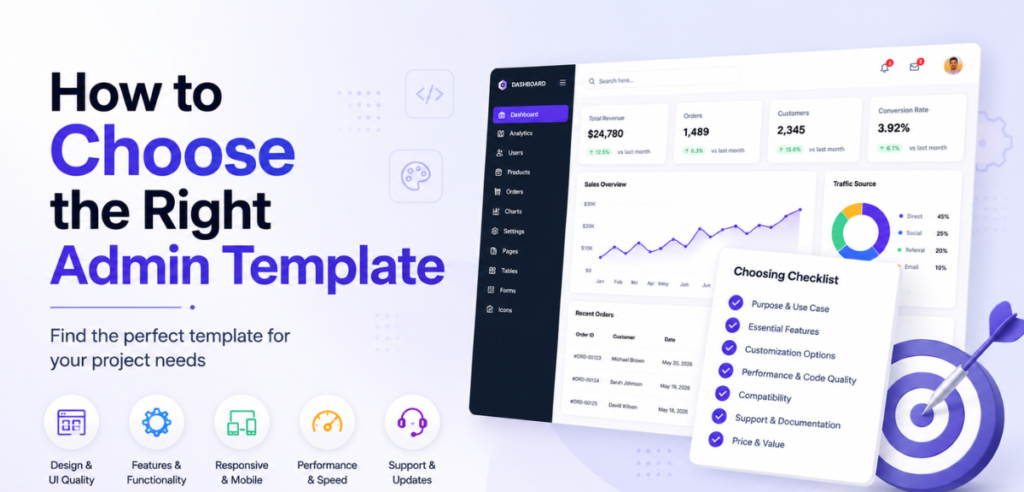
How to Choose the Right Ecommerce Dashboard Template
Run through these four questions before downloading:
1. Does your backend match the template framework?
A Next.js template does not slot cleanly into a Laravel monolith. Bootstrap templates work with any server-rendered backend. Match the framework before evaluating the design.
2. Does it include e-commerce-specific pages?
Open the demo and check for an order detail page, a product edit form, and a customer record view. If those three are missing, you are building core ecommerce screens from scratch.
3. Is inventory management included?
Generic admin templates skip this. E-commerce-specific templates treat it as a primary view.
4. How does it handle large datasets?
Check whether data tables use server-side pagination. Client-side pagination that loads thousands of products into the browser degrades performance as the catalogue grows.
Free vs Premium Ecommerce Admin Templates
Free ecommerce admin templates work for internal tools, prototypes, and small-scale stores with limited scope. The trade-offs are predictable: fewer ecommerce-specific pages, no dedicated support, and slower updates when framework versions change.
Premium templates justify their cost for production SaaS platforms, client-facing store management panels, and applications that a team will extend over months. More ecommerce pages, fewer component gaps, and maintainer support when something breaks make them the lower-risk choice for stores managing real order volume.
For a first MVP, a free template with a clear upgrade path is a reasonable starting point. For a store processing hundreds of orders a week, the hours saved during the first week of integration typically cover the cost of the template.
Frequently Asked Questions
Which is the best ecommerce admin dashboard template in 2026?
Larkon is the most ecommerce-complete template for teams needing full order, product, inventory, and customer management across seven framework versions. Metronic is the stronger choice for enterprise-scale builds that require 8 framework variants and 40 prebuilt layouts. For a clean Bootstrap option, Zenith from MyCreativeTemplates covers ecommerce back-end workflows with well-structured, maintainable code.
What features should an ecommerce admin dashboard include?
At minimum: order management with status workflows, product catalog with variant support, inventory tracking, customer records with purchase history, and analytics covering revenue and product performance. Templates missing any of these require custom development to replace the gap.
Are free ecommerce dashboard templates good for startups?
For early-stage MVPs and internal tools, free templates are a viable starting point. Adminator provides a solid lightweight base at no cost. For stores expecting rapid growth in order volume, a premium template with server-side table pagination and dedicated ecommerce pages reduces rework as the business scales.
Which ecommerce dashboard template is best for Shopify or WooCommerce?
Fastkart is the only template in this list with a Shopify-compatible variant. For WooCommerce, Bootstrap templates such as Zenith or Larkon integrate cleanly with a WordPress backend. For Shopify admin apps that interact deeply with Shopify APIs, Shopify’s own Polaris design system is the recommended starting point.
Can ecommerce admin templates handle analytics and inventory management?
The purpose-built ones do. Metronic, Larkon, and Vuexy include inventory pages and analytics dashboards with revenue charts, order status tracking, and product performance panels. Always verify these in the live demo before downloading. A template listing ecommerce as a use case is different from one that ships dedicated ecommerce screens.
Pick the Right Ecommerce Admin Dashboard Template for Your Stack
An ecommerce admin dashboard is the operational center of your store. Picking a template built specifically for ecommerce means order management, product catalog, inventory, customer records, and analytics are available on day one.
Larkon covers the widest set of ecommerce pages across the most framework variants. Metronic is the enterprise choice, offering 40 prebuilt layouts and 8 framework versions. Fastkart is the go-to for Shopify builds. Vuexy and Sneat handle multi-framework teams. Zenith delivers a clean, well-structured Bootstrap option for teams that want maintainable code without the complexity of a large enterprise template.