



 Purchase Now
 Live Preview







 Purchase Now

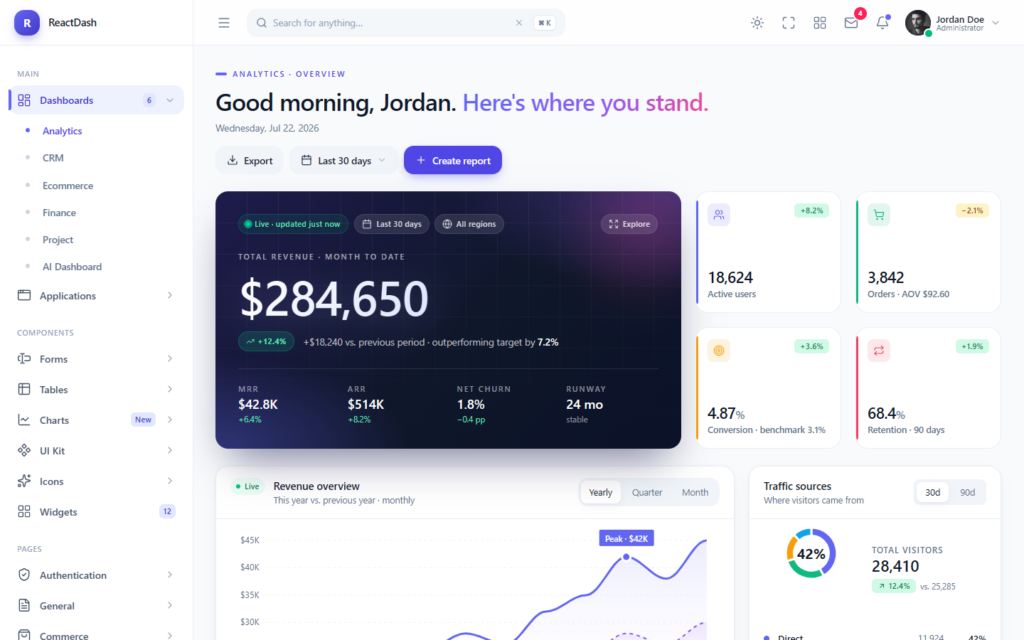
ReactDash is a premium admin dashboard template built for real product teams that need to ship a polished web application in days rather than months. Powered by Tailwind CSS v4, jQuery 3.7 and Lucide Icons, it delivers a modern, lightweight foundation that works with any backend — Rails, Django, Laravel, .NET, Node.js or a static site generator. Every page is hand-crafted with production-ready markup, sensible defaults and a design system that scales from a solo indie build to a full enterprise product.
Six Unique Dashboards
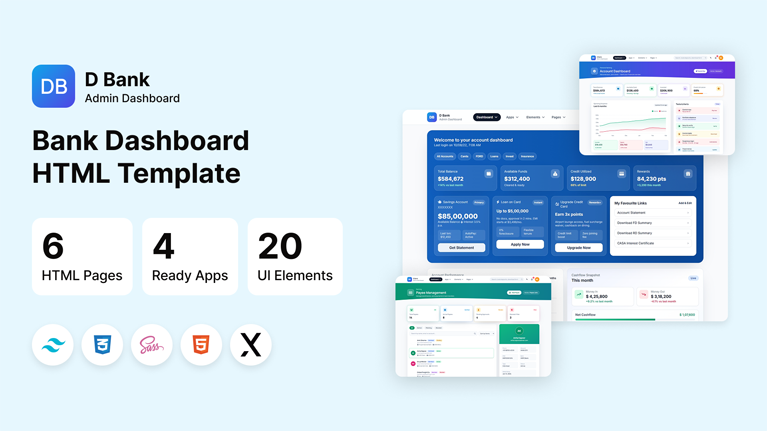
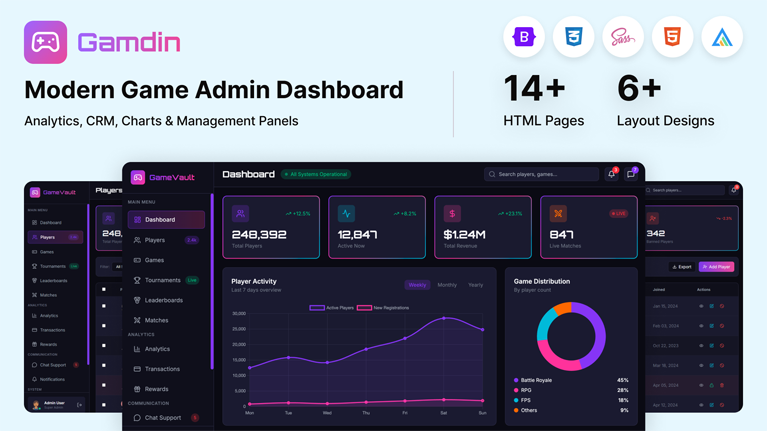
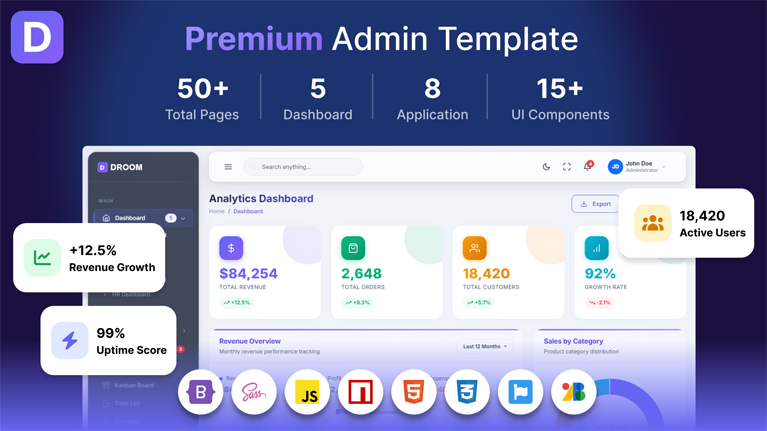
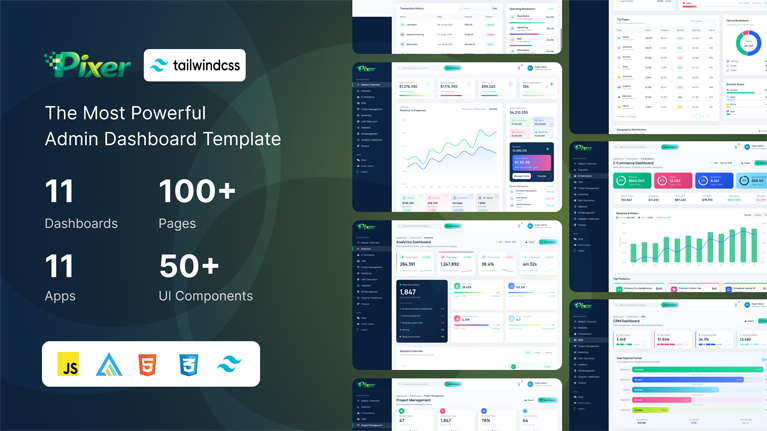
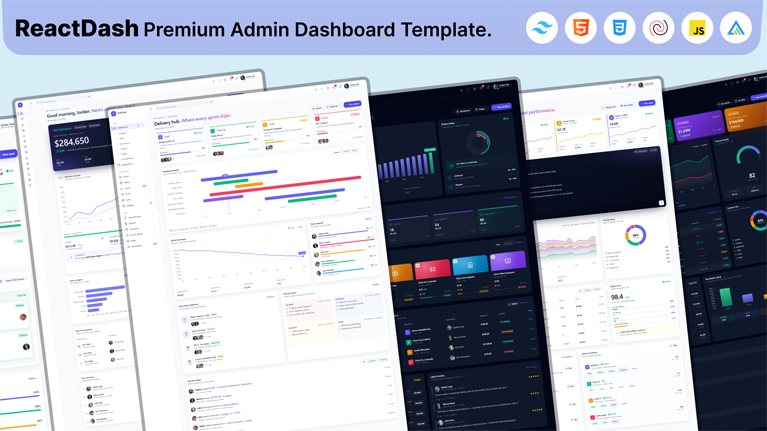
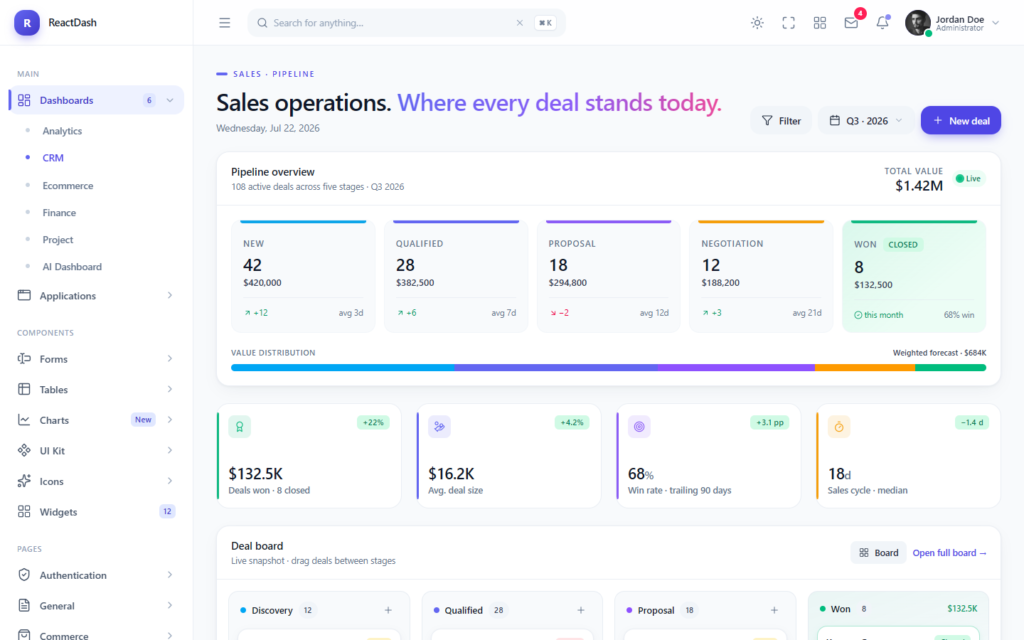
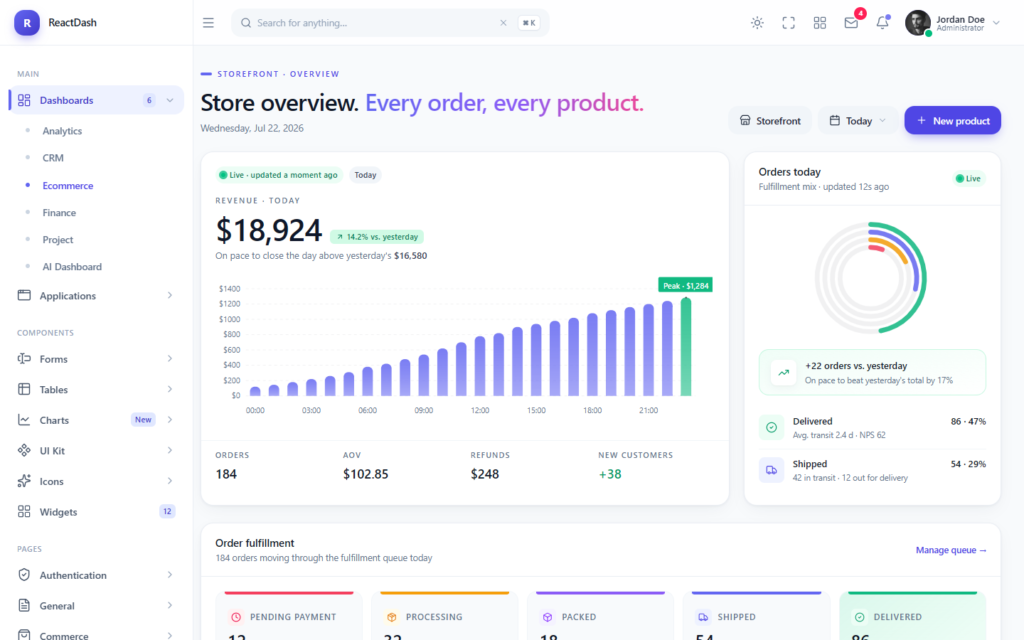
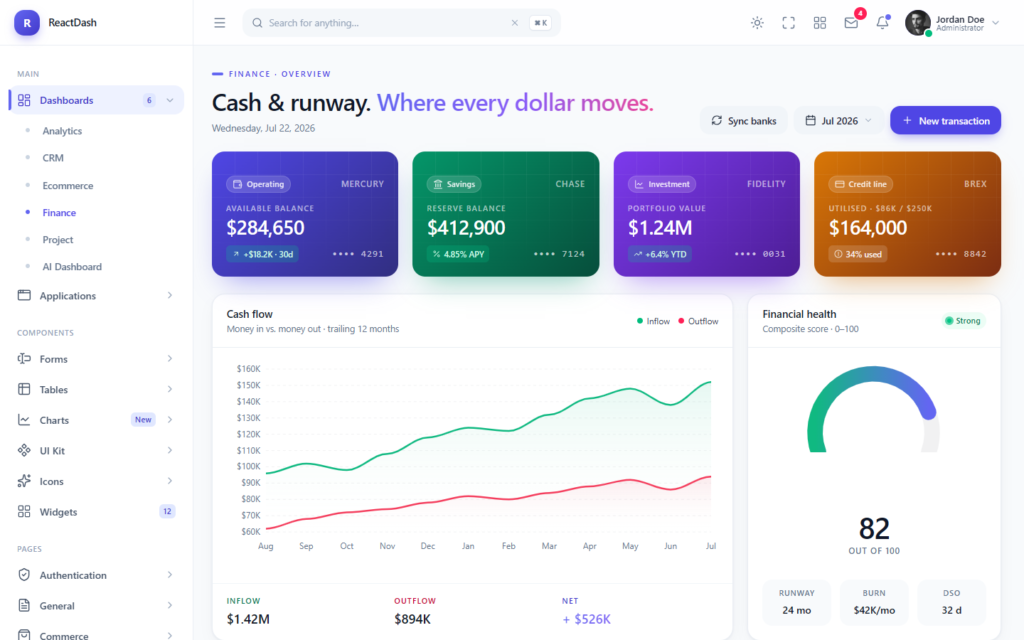
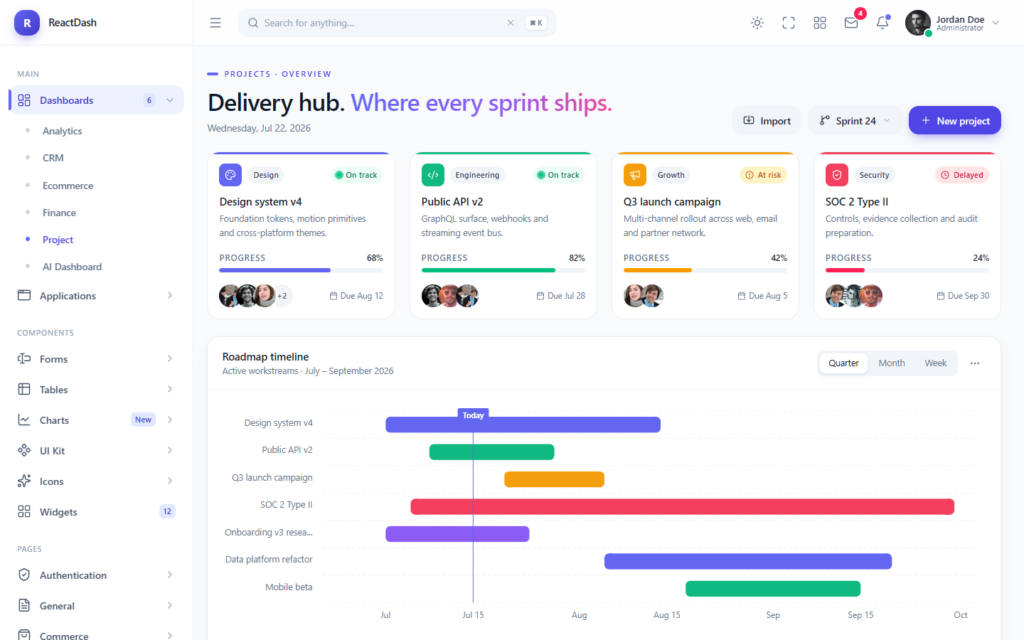
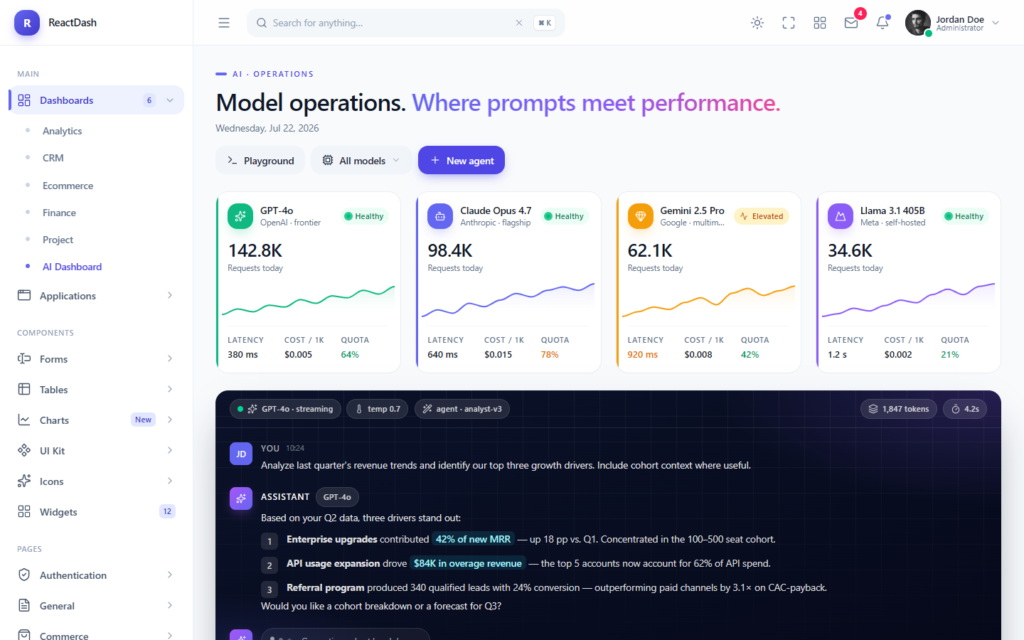
ReactDash ships with six distinct dashboards, each designed as a first-class product rather than a colour swap. The Analytics dashboard focuses on high-level KPIs with a bento-style hero, revenue chart, traffic sources, orders and geographic distribution. The CRM dashboard turns the surface into a sales command centre with pipeline kanban, win-rate funnel, sales-rep leaderboard and MRR / ARR trending. The E-commerce dashboard is oriented around store operations — revenue waterfall, category performance, top SKUs, live orders and inventory alerts. The Finance dashboard is a personal-money view with balance cards, spending category donuts, cash-flow charts, transactions and cards. The Project Management dashboard focuses on delivery — sprint burn-down, task board, team capacity, velocity and release calendar. The AI Operations dashboard is a control room for LLM-based products — model comparison, token spend, latency heatmap, prompt library and a working Copilot console.
Seven Working Applications
Beyond the dashboards, ReactDash includes seven full application screens with realistic interactions. The Email application is a three-pane inbox with folders, labels, search and a rich reader. The Chat application implements threads, reactions, typing indicators and attachments. The Calendar application supports month, week and day views with colour-coded events. The Kanban board provides drag-and-drop cards, avatars, tags and card counts per column. The Contacts application is a searchable contact-card grid with tags and a detail panel. The File Manager offers grid and list views, storage gauge, quick upload and sharing. The AI Assistant is a full chat interface with conversation history, inline data cards, source connections and prompt suggestions.
Forty-Plus Inner Pages
ReactDash covers every screen a real product needs. The Authentication set includes login, register, forgot password, reset password, email verification, two-factor authentication and lock screen — all with a split-screen dark-gradient hero on the wider auth pages and a clean centred card on the simpler ones. The General pages cover Profile with contribution heatmap and career timeline, Settings with tabbed preferences, Pricing with three-tier plans and a feature-comparison matrix, FAQ with grouped accordions, Team with a searchable contact-card grid, a full Timeline page, Gallery with a working image lightbox, Search results and a Blank page starter. The Commerce pages include Invoice list, Invoice details with printable layout, Order details with a five-step fulfilment timeline, User list with photo avatars and User details with a profile cover, KPIs and 12-month spend chart. The Error and System pages include 404, 500, Coming Soon with a countdown, and Maintenance — all rendered chromeless without sidebar or topbar. Standalone pages include Maps with an animated SVG world map and the AI Assistant.
Three Hundred Plus Components
ReactDash includes over three hundred handcrafted UI components across cards, tables, forms, dropdowns, modals, tabs, accordions, timelines, avatars, badges, chips, alerts, buttons, progress bars, tooltips, off-canvas panels and typography. Form patterns include layouts, elements, validation, file upload, rich editors and multi-step wizards. Table patterns include basic, editable, responsive, grid and data-table with search and sort. The widgets library adds countdowns, weather cards, activity heatmaps, contribution grids, gauges, image lightbox and OTP inputs.
Three Charting Libraries Bundled
ReactDash bundles three of the most popular charting libraries — ApexCharts, Chart.js and Apache ECharts — themed to match the dashboard palette. Sparklines, gauges, heatmaps and a chart-timeline pattern are provided out of the box. Every chart adapts its colour tokens to light or dark mode automatically, and the samples across dashboards show best-practice patterns for bar, line, area, donut, radial, mixed, stacked and comparison charts.
Four Icon Libraries
The template ships with four icon libraries. Lucide is the default with over one thousand outline icons used across every dashboard and application. Remix Icons provides an alternative outline style. Bootstrap Icons cover a familiar Bootstrap-aesthetic. Font Awesome is included for teams already invested in it. Any icon library can be swapped by class without touching the markup structure.
Hand-Tuned Dark Mode
Every page in ReactDash ships with a dark variant that was tuned by hand rather than auto-inverted. Contrast, colour and shadow were all picked for the dark palette. The theme toggle is stored per user in localStorage, respects the operating-system preference on first visit, and applies the correct theme before body render to eliminate flash of unstyled content. The Tailwind v4 CSS-first token layer makes it trivial to add additional themes or brand palettes.
Tailwind CSS v4 CSS-First Architecture
ReactDash uses the new Tailwind CSS v4 CSS-first architecture with the @theme directive for design tokens. There is no PostCSS configuration to maintain — one config file, one npm command, and the build completes in under four seconds cold. The @custom-variant directive powers dark-mode class toggling, and every token is exposed as a CSS custom property that can be overridden per project or per section. The output CSS is minified and averages well under one hundred kilobytes even with every dashboard and page included.
Modern JavaScript, No Plugin Bloat
The interactive layer is written in one small, modular jQuery 3.7 file organised into named modules — Theme, Sidebar, Dropdown, Charts, Apps, Forms, Tables, ChartsPages, UIKit, Widgets and Pages. There is no jQuery UI, no legacy plugin sprawl and no build framework lock-in. Alpine.js is included as an optional deferred script for teams that prefer declarative behaviour on top of the jQuery baseline. The whole surface works without a build framework — drop the compiled CSS and JS into any backend template engine.
Production-Ready and Extensible
Every page is standalone HTML that renders correctly under file://, over a local server or behind any production backend. There are no inline styles, no inline scripts and no inline event handlers — everything routes through the shared CSS and app.js. The template ships with a favicon in SVG, semantic meta tags for Open Graph and Twitter Card, Inter and JetBrains Mono as variable fonts, an OTP input helper, an image lightbox with keyboard navigation and an AI chat auto-scroll. One purchase includes lifetime updates and six to twelve months of email support depending on the license tier.







 Live Preview